



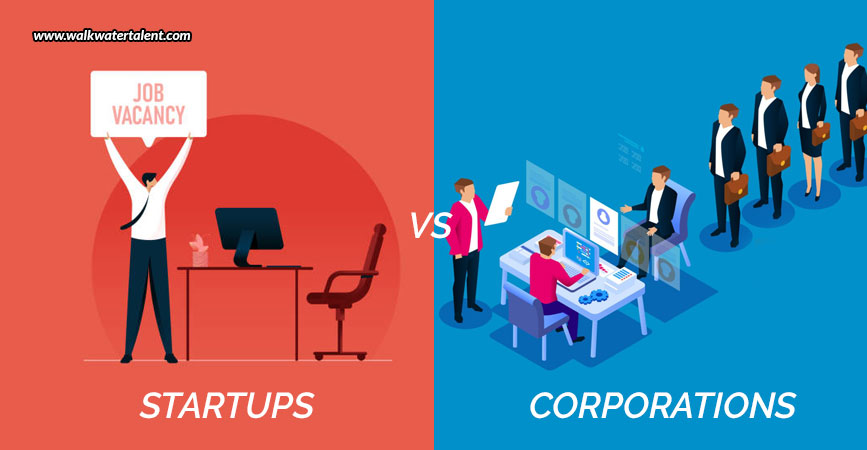
In the current dynamic business environment, recruitment cannot be approached with a one-size-fits-all methodology. The specific needs, objectives, and resources of an organization play a crucial role in shaping its hiring strategies. This is particularly clear when comparing startups to well-established corporations. Although both seek to attract the best talent, their methods, priorities, and obstacles vary significantly. Recognizing these distinctions is essential for creating effective recruitment strategies that are in line with organizational objectives and stages of growth. This blog examines the unique recruitment methods utilized by startups and corporations, investigates their individual hiring challenges and benefits, and provides practical strategies to enhance recruitment results in both scenarios.
Organizational structure and recruitment objectives
Startups:
Startups generally function with flat organizational structures and streamlined teams. The recruitment process emphasizes hiring adaptable individuals who can take on various roles rather than merely filling specific positions. The primary focus is on agility, innovation, and cultural alignment.
Corporations:
Larger organizations feature clearly defined departments and job roles. Recruitment is methodical, frequently managed by specialized HR teams or talent acquisition units. The goal is to identify specialists capable of efficiently executing specific tasks within a broader organizational framework.
Key difference:
Startups prioritize potential and flexibility in their hires. Corporations focus on experience and specialized knowledge.
Employer branding and talent attraction
Startups:
Many startups do not possess the brand recognition or employer reputation that larger companies enjoy. Consequently, they must adopt innovative strategies to market themselves to prospective employees. Startups often attract candidates who prioritize innovation, rapid advancement, and meaningful contributions over job stability and traditional benefits.
Corporations:
Established brands enjoy the advantage of a solid reputation, organized onboarding procedures, and attractive benefits that appeal to a wide range of applicants. Their employer brand is well-established, facilitating talent attraction, particularly from candidates who are more risk-averse.
Key difference:
Startups must actively cultivate and promote their employer brand, whereas corporations can typically depend on their existing visibility.
Role definitions and job descriptions
Startups:
In startups, roles are frequently dynamic. Job descriptions tend to be broad, and responsibilities can change quickly as the organization grows. This setting attracts candidates who appreciate variety and the opportunity to learn continuously.
Corporations:
Conversely, roles in corporations are distinctly defined with established expectations, KPIs, and reporting hierarchies. This level of clarity provides candidates with a sense of security and opportunities for career advancement within the company.
Key difference:
Startups provide flexibility and opportunities for learning, while corporations deliver structure and clarity.
Culture fit and team dynamics
Startups:
Culture plays a vital role in the hiring process for startups. A single hire can greatly influence team dynamics, making it essential to prioritize cultural alignment and a shared vision.
Corporations:
Although culture fit is still significant, the effect of an individual employee on the overall company culture is less impactful. There is a greater focus on fitting into an established system rather than altering it.
Key difference:
Startups aim to find culture creators; corporations look for culture integrators.
Speed and flexibility of the hiring process
Startups:
With smaller teams and quicker decision-making, startups can swiftly transition from interviews to job offers. This nimbleness is particularly appealing to top talent, especially in competitive sectors like technology.
Corporations:
In contrast, hiring procedures in corporations tend to be more bureaucratic. It is common to encounter multiple interview rounds, background checks, and necessary approvals, leading to a longer hiring timeline. Nevertheless, this structured approach guarantees comprehensive vetting and alignment with the company culture.
Key difference:
Startups emphasize speed and adaptability; corporations concentrate on process and accuracy.
Compensation and benefits
Startups:
Due to constrained budgets, startups may struggle to match corporations in terms of salaries and benefits. However, they often provide equity, flexible work arrangements, and opportunities for rapid career advancement as incentives.
Corporations:
With larger budgets, corporations can offer competitive salaries, extensive benefits, training programs, and job security. This makes them appealing to candidates who prioritize financial stability and long-term career growth.
Key difference:
Startups offer compensation through equity and experience; corporations provide stability and well-structured benefits.
Use of technology and recruitment tools
Startups:
Startups frequently utilize cost-effective tools and platforms (such as LinkedIn, job boards, and referral programs) to connect with candidates. They are more inclined to try out new technologies and digital hiring methods like AI screening or video interviews.
Corporations:
Corporations generally invest in comprehensive Applicant Tracking Systems (ATS), enterprise HR software, and professional recruitment agencies. Their technology infrastructure is extensive but may lack adaptability.
Key difference:
Startups are flexible and innovative with hiring technology; corporations are organized and data-oriented.
Hiring challenges
Startups:
- Lack of brand recognition.
- Limited budgets for salaries and marketing.
- Difficulty in competing with larger firms for top talent.
- Preference for generalists over specialists.
- Risk aversion from potential candidates.
Corporations:
- Longer time-to-hire.
- Bureaucratic hiring processes.
- Over-reliance on credentials instead of potential.
- Risk of cultural misalignment due to rigid structures.
- Internal politics influencing hiring choices.
Recruitment strategies for startups
- Utilize founders’ networks:
Early-stage recruitment frequently depends on personal connections and referrals. Founders should leverage their own networks to identify reliable candidates.
- Emphasize culture and mission:
Showcase the startup’s vision, innovation, and the influence employees can exert. Candidates who are enthusiastic about creating something from scratch will resonate with this narrative.
- Provide growth opportunities:
Present the position not merely as a job, but as a pivotal career opportunity. Flexibility, visibility, and rapid learning are significant attractions.
- Be open about risks and rewards:
Candidates value transparency regarding the startup’s current status, funding, and challenges. Openness fosters trust and helps draw in like-minded individuals.
- Utilize social media and niche platforms:
Targeted outreach on sites like AngelList, GitHub, and Twitter can facilitate connections with professionals inclined towards startups.
Recruitment strategies for corporations
- Optimize the hiring process:
While having a structured approach is crucial, minimizing unnecessary delays can enhance the candidate experience and lower dropout rates.
- Enhance employer branding:
Regularly highlight employee testimonials, workplace accomplishments, and DEI initiatives across social and professional platforms.
- Develop a talent pipeline:
Create internship programs, alumni networks, and partnerships with universities to maintain a steady talent pool.
- Prioritize DEI hiring:
Ensure that hiring practices are inclusive and fair to cultivate a diverse workforce that aligns with global trends.
- Provide career growth paths:
Showcase opportunities for skill enhancement, mentorship, and internal mobility to attract driven professionals.
Attracting the right talent is crucial for achieving success, whether you are a rapidly growing startup or a well-established company. Startups tend to emphasize speed, adaptability, and cultural compatibility, while corporations focus on structure, expertise, and long-term alignment. Each method has its own advantages and challenges, and there is no one-size-fits-all solution. Understanding the differences between hiring in startups and corporations, along with apprehending the challenges and best strategies, allows organizations to develop recruitment strategies that are not only effective, but also resonate with their values and growth stage. By pinpointing what is truly important – whether it be innovation, stability, culture, or scalability – companies can assemble teams that foster sustainable success in a competitive talent market. For organizations seeking expert guidance in navigating these distinct recruitment challenges, partnering with trusted firms like WalkWater Talent Advisors, one of the best recruitment companies in India, can provide tailored strategies and access to top talent, ensuring successful hiring outcomes aligned with business goals.